We Tested the 5 Most Popular Methods for Men's Under-Eye Bags. Only One Actually Worked.
"You look like you've been pulling all-nighters." If someone's said that to you lately, this article is for you. We cut through the hype to find what actually works — and why everything you've already tried probably failed.

You've tried the creams. Maybe a few serums with ingredient lists you can't pronounce. Maybe even one of those LED masks that felt like a chore from day one. You're back to square one every morning — and you know it.
For most men, under-eye bags aren't a vanity problem. They're a credibility problem. Your boss pulls you aside. A colleague asks if you're feeling okay. You walk into a high-stakes meeting and spend the first ten minutes wondering if everyone's looking at your eyes instead of your slides.
If that sounds familiar, the bad news is this: most of the methods being marketed to men simply cannot work. Not because of bad ingredients or bad devices — but because of physics. They can't reach the actual problem.
Recent dermatological research has confirmed that under-eye bags are driven by three mechanisms occurring 2–3mm beneath the skin's surface: sluggish microcirculation (causing dark circles), impaired lymphatic drainage (causing fluid buildup and puffiness), and weakening of the cellular support structures (causing hollowing and sagging that worsens with age).
Every solution that works on the surface — creams, patches, rollers — is treating the symptom, not the cause. And unlike women's skincare, where there's decades of product development, men's options are even more limited and less rigorously tested.
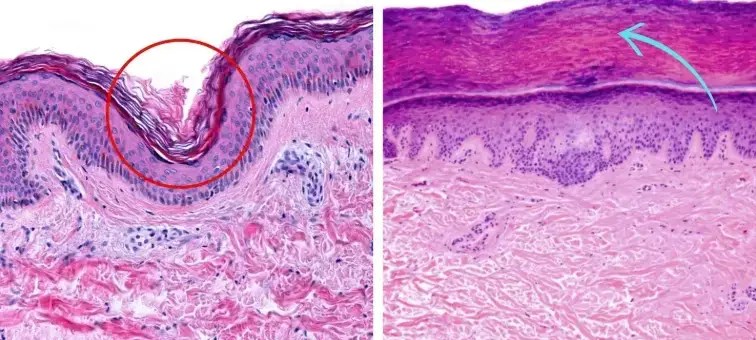
We evaluated the five most common approaches men in their 40s and 50s are using today, across four objective criteria. Here's what we found.
What We Looked For
Before the rankings, here are the four criteria behind every score. These aren't arbitrary — they're grounded in what dermatological research says is actually required to reduce under-eye bags long-term, and in what works for real men with real schedules.
The Results: Ranked Worst to Best

Advantages
- Tackles all 3 root causes simultaneously
- Completely hands-free — works while you sit
- 10 minutes a day, fits into any evening routine
- One-time purchase, no repeat costs
- Gentle enough for sensitive skin around the eyes
- Technology validated by 5,000+ peer-reviewed studies
Limitations
- Visible results take 2–3 weeks of daily use
- Only available online — no retail stores
This was the clear winner. Not because it's the most marketed or the most expensive — but because it's the only approach that actually reaches the causes instead of masking the symptoms.
Red light therapy was first validated over a century ago and has since accumulated more than 5,000 peer-reviewed studies confirming that specific wavelengths penetrate 2–3mm below the skin to restart sluggish microcirculation and stimulate cellular renewal — both critical causes of the dark, hollow, baggy look that worsens as men age.
But red light alone can't move the fluid buildup responsible for that puffy morning look. That's where EMS microcurrent completes the picture. Gentle electrical pulses reactivate the muscles and lymphatic system around the eye, draining fluid that's been accumulating overnight — the exact mechanism behind morning puffiness.
The only device combining both technologies in a single, truly hands-free at-home format is RevitalEyes by Botanique Paris. Put it on, press a button, continue watching TV or winding down — both technologies work on all three root causes simultaneously. No technique to learn. No complex routine. No 15-minute morning ritual of dabbing creams that don't reach the problem.
For men who've been burned before — who've wasted money on products that promised results and delivered nothing — the 120-day return window is meaningful. That's four months to evaluate actual, long-term results. Not first impressions after a single use.
120-day money-back guarantee · Free shipping
Advantages
- Cosmetically masks the appearance relatively quickly
- Well-established procedure with trained practitioners
Limitations
- $400–$800 per session, every 3–6 months
- Needles, downtime, bruising, potential nerve issues
- Documented side effects: drooping, headaches, muscle weakness
- Results vanish completely without ongoing maintenance
- Doesn't address circulation, drainage, or root causes at all
- Many men report feeling self-conscious about pursuing it
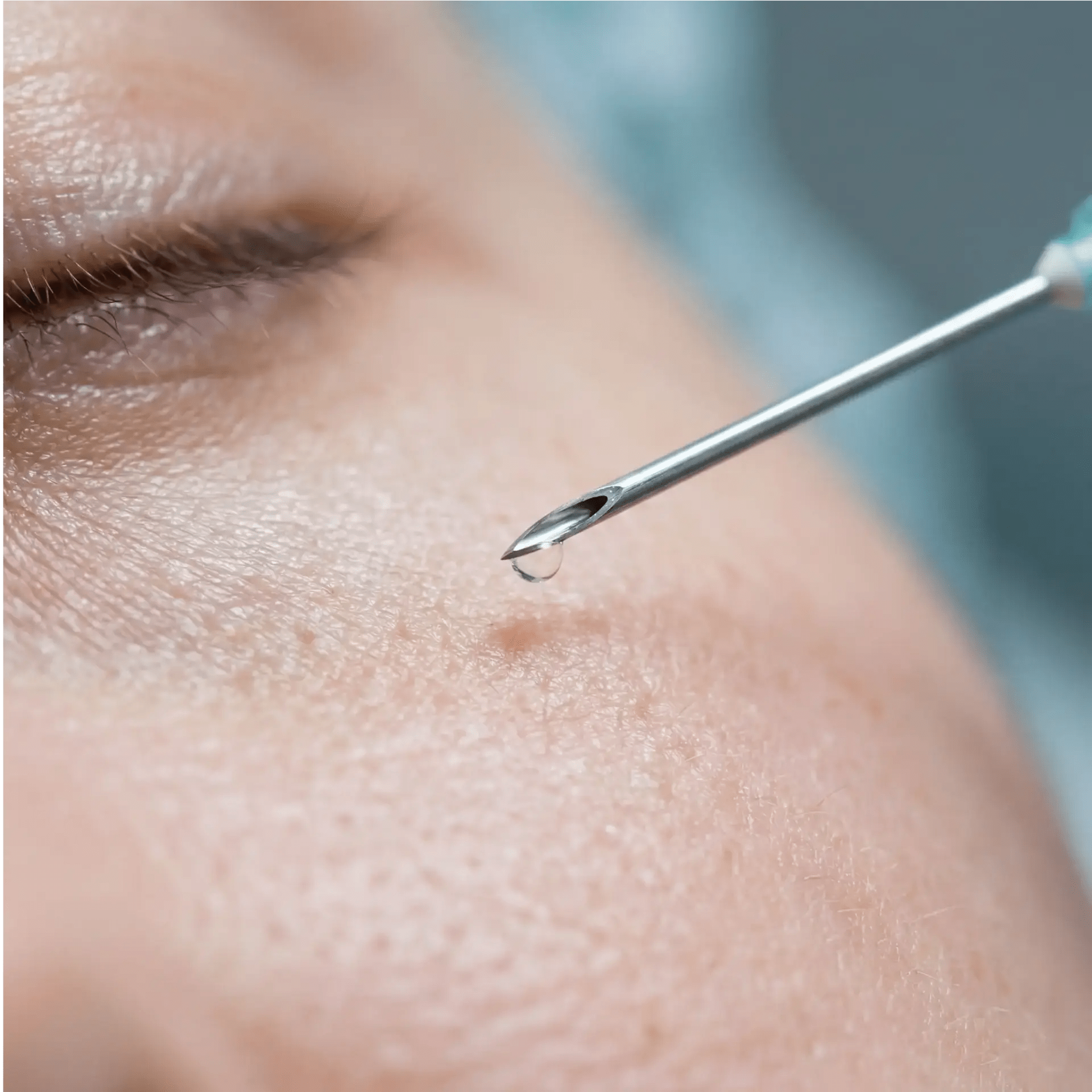
Let's be direct: Botox doesn't fix under-eye bags. It temporarily masks them. It doesn't restart circulation. It doesn't improve lymphatic drainage. It doesn't rebuild the cellular support structures weakening beneath your skin. It paralyzes muscles and injects volume to hide the visible symptoms — while the underlying problem continues to worsen untreated.
For men, there's also a practical barrier most articles don't address. Botox requires repeated clinic appointments — at $400–$800 per session, every 3–6 months — that's up to $3,200 per year for results that disappear the moment you stop going. The side effects are real: headaches, bruising, swelling, and in some cases drooping eyelids or muscle weakness lasting weeks.
Botox came second in our ranking because it does produce a cosmetic change — which is more than most surface creams can say. But it scores near the bottom on every criterion that actually matters for long-term resolution of the problem.
Advantages
- Easy to find, easy to use
- Some provide temporary surface hydration
- Safe for most skin types
Limitations
- Physically cannot reach the root causes 2–3mm below
- No effect on circulation, drainage, or structure
- Premium men's eye creams: $40–$150/month
- Men with sensitive eyes often react to hidden fragrances
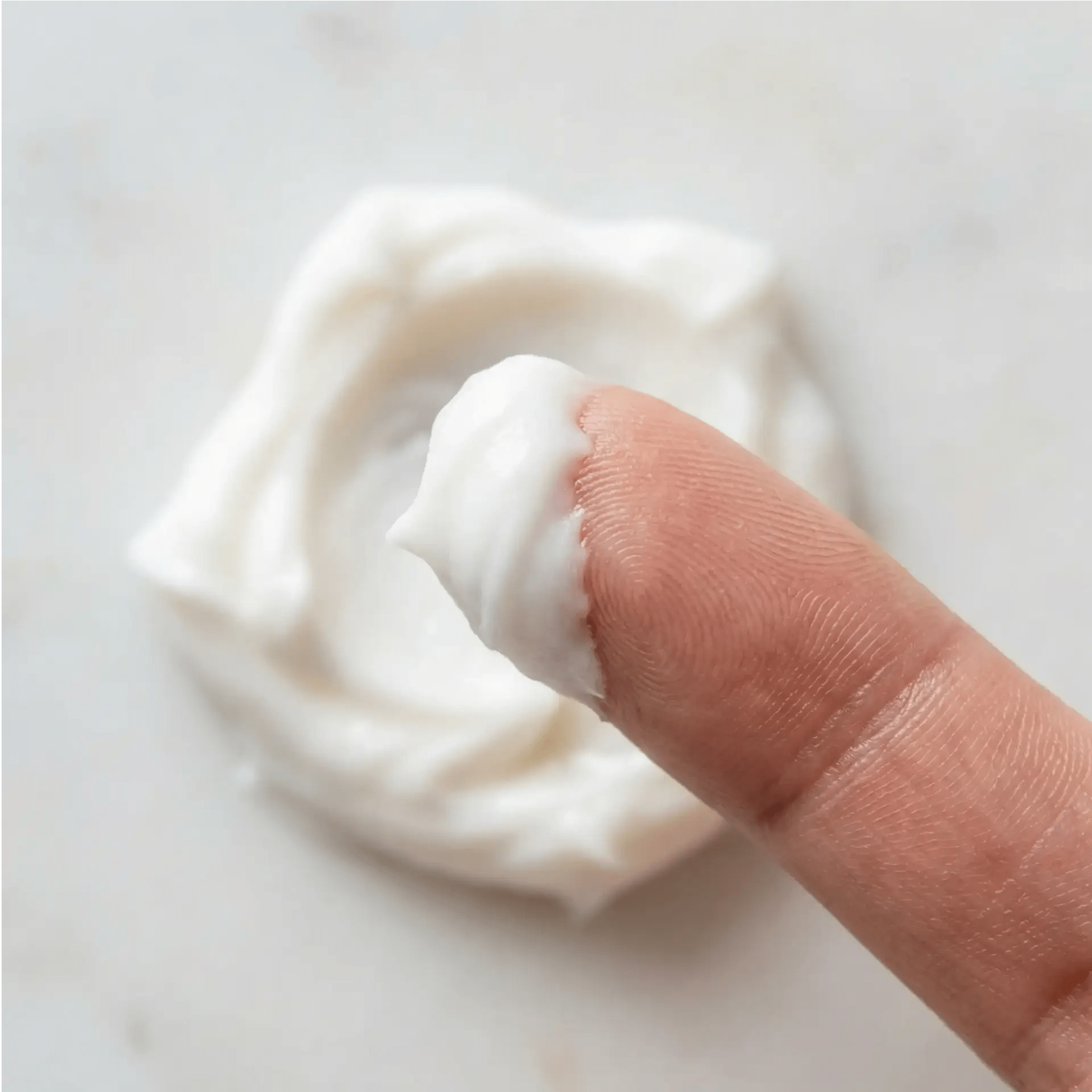
This is what most men try first — and what most men are still stuck on years later. Men's eye creams have proliferated in the last decade, with brands targeting "tired-looking" men with promises of depuffing, brightening, and firming. Almost none of it holds up.
It's not a question of ingredients or price. The molecules in any topical cream are too large to penetrate to the depth where the actual problems live. A $12 drugstore cream and a $180 "clinically formulated" men's serum both stop at the same barrier. Creams can hydrate the surface and temporarily soften the appearance of fine lines — but they cannot restart circulation, drain lymph fluid, or rebuild weakening support structures beneath the skin. They work reasonably well as a complement to something that actually reaches the root causes. On their own, they're a holding pattern.
Men with sensitive eyes face an added problem: many eye creams contain hidden fragrance listed as "parfum" that causes swelling, redness, and irritation — turning a frustrating product into an actively damaging one.
Advantages
- Easy to use, no technique required
- Temporary cooling or tightening before events
Limitations
- Any effect is gone within a few hours
- Single-use, expensive over time ($2–$5 per pair)
- Zero long-term impact on root causes
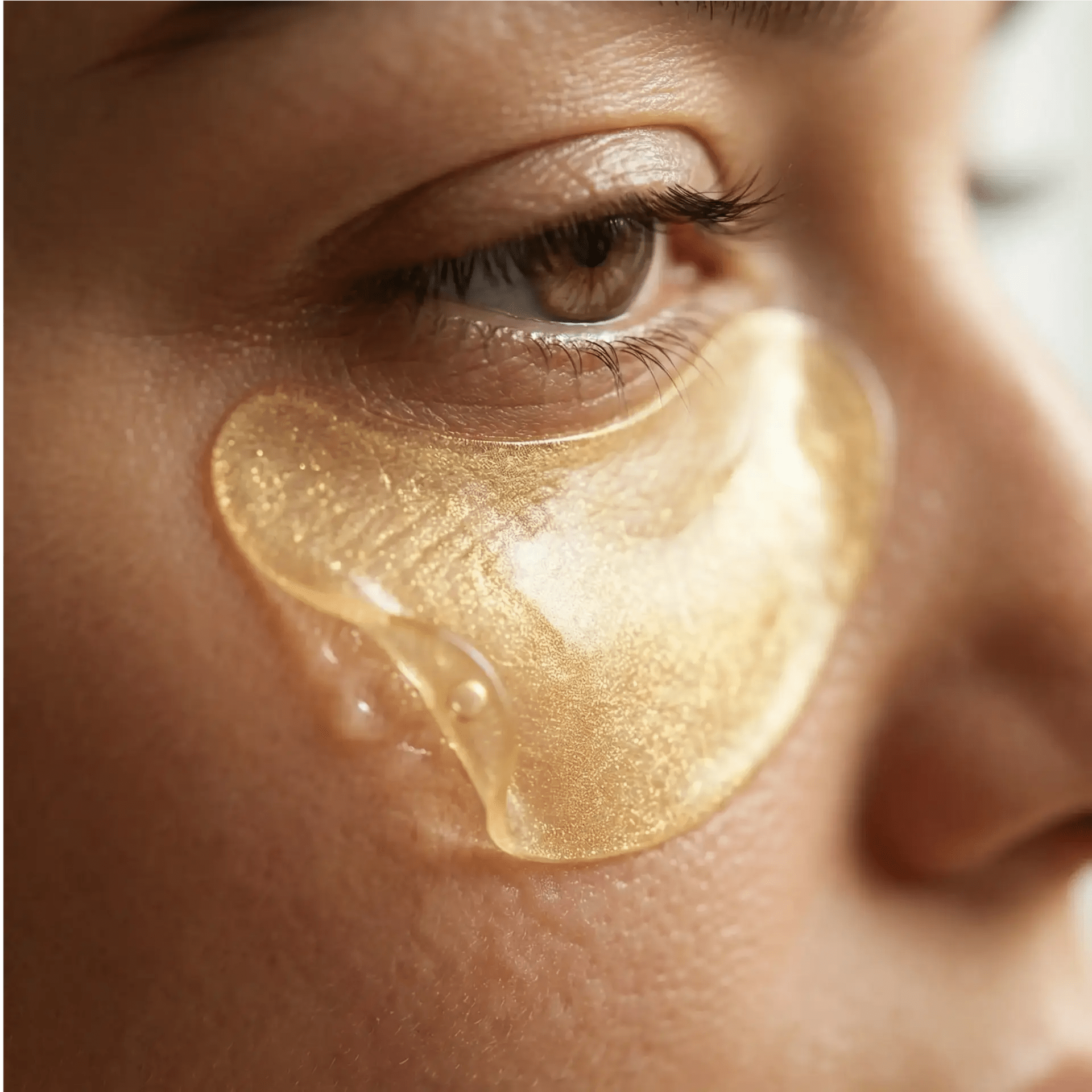
Patches and masks are increasingly being marketed to men, often under "performance" or "recovery" branding. The concept is appealing — 15 minutes, peel off, look less wrecked for a big meeting. The reality is they're purely cosmetic and temporary.
The cooling sensation and mild tightening can create a temporarily better appearance — but it's typically gone by mid-morning. They suffer from the same fundamental limitation as creams: they sit on the surface. No patch can restart circulation, drain lymph fluid, or rebuild the structural support deteriorating 2–3mm below. At $2–$5 per use, daily patching costs over $700 a year — for a result that evaporates before lunch.

Advantages
- Cheap or free (cucumber slices, cold tea bags, etc.)
- Rollers are an affordable one-time purchase
Limitations
- Requires daily technique and sustained effort
- Too light to reach root causes beneath the surface
- No clinical evidence for anti-aging benefit
- Home remedies provide minimal, temporary relief at best
Cucumber slices. Cold tea bags. Jade rollers. Men who've exhausted the cream aisle often end up here — in the home remedy territory that feels sensible but delivers very little. Manual rolling can temporarily move fluid sitting near the surface, producing mild, short-lived improvement in very minor puffiness. For actual under-eye bags, the evidence is essentially nonexistent.
The deeper problem for men: these approaches demand consistent technique and daily effort during the time when you have the least energy — early mornings or exhausted evenings. Most men who try a daily rolling routine abandon it within weeks because it requires active participation every single day, and the results don't reinforce the habit. The wrong pressure risks bruising the delicate under-eye tissue. The right pressure, applied consistently over time, produces minimal change. It's the definition of a frustrating effort-to-result ratio.
Our Verdict
After evaluating all five methods across objective criteria — including factors specific to how men actually live and use these products — at-home red light therapy combined with EMS microcurrent was the only approach that addressed all three root causes of under-eye bags.
Botox may produce a fast cosmetic change. But it doesn't address a single root cause. It costs thousands per year, carries documented side effects, and stops working the moment you stop going. Creams, patches, and rollers cannot reach the depth where the actual problem lives. Home remedies are placebos for most men dealing with real bags.
The only device combining both technologies in a genuinely hands-free, at-home format — with clinical backing and a return window long enough to actually evaluate long-term results — was RevitalEyes by Botanique Paris.
For men who've been burned before, who are skeptical of marketing, who need something that fits into an exhausted evening rather than requiring a clinic appointment: this is the exception, not another disappointment.
- Targets all 3 root causes simultaneously
- Completely hands-free — 10 minutes while you unwind
- Nobel Prize-backed light therapy technology
- One-time purchase, no recurring clinic costs
- Gentle enough for sensitive eyes
- 120-day money-back guarantee
120-day guarantee · Free shipping · Complimentary eye cream included