We Tested the 5 Most Popular Methods for Reducing Under-Eye Bags. Only One Actually Worked.

From $12 drugstore creams to frozen spoons from grandma's advice, we put every major under-eye approach through a simple test: does it actually reach the root causes? The results surprised us.
If you've been dealing with under-eye bags, dark circles, or that hollow, tired look that seems to get worse every year, you've probably already tried something. Maybe a few things. Maybe a lot of things.
Eye creams, patches, jade rollers, serums with ingredients you can't pronounce. Maybe you've even tried the cold spoon trick.
And you've probably noticed that most of them don't actually work.
There's a reason for that. Recent dermatological research has confirmed that under-eye bags are caused by three things happening 2-3mm beneath the skin's surface: (2)(3)(15)(16) sluggish circulation (causing dark circles), impaired drainage (causing puffiness), and weakening cellular support (causing hollowing and sagging).
Any approach that can't reach all three of those causes is, at best, a temporary cover-up.
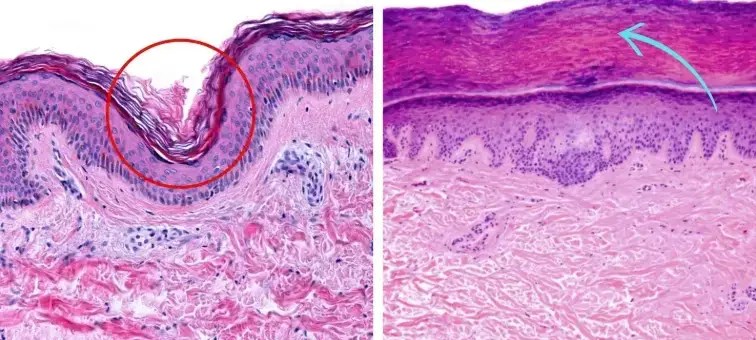
We wanted to find out which of the most popular methods actually addresses what's going on underneath, and which ones are just expensive disappointments. So we evaluated the five most common approaches women over 40 are using today.
What we looked for
Before diving into the results, here are the four criteria we used to evaluate each method. These aren't arbitrary. They're based on what dermatological research says is required to actually reduce under-eye bags long-term.
With these four criteria in mind, here's how each method performed.
The results: ranked from best to worst

Advantages
- Addresses all 3 root causes simultaneously
- Red light therapy backed by extensive clinical research
- One-time purchase, no recurring costs
- 10 minutes a day, completely hands-free
- No mess, no prep, completely hands-free
Limitations
- Results take 2-3 weeks to become visible
- Only available online
This was the clear winner, and it wasn't close. Red light therapy has been studied extensively since the 1960s, (4)(5) and thousands of peer-reviewed studies have since confirmed that specific wavelengths of light can penetrate 2-3mm below the skin to restart sluggish circulation and stimulate cellular renewal. (1)(2)(3)(6)
But red light alone can't address the fluid buildup that causes morning puffiness. That's where EMS microcurrent comes in. Gentle electrical pulses reactivate the muscles and drainage system around the eyes, moving the fluid that's been sitting there overnight. (9)(10)(11)
The only device we found that combines both technologies in a single, at-home device is RevitalEyes by Botanique Paris. You put them on for ten minutes, press one button, and both technologies work on all three root causes while you relax. It's the only method we tested that scored above 4/5 on every single criterion.
The brand also offers a 120-day return window, which gave us enough time to actually evaluate long-term results rather than just first impressions.
Check Availability120-day money-back guarantee · Free shipping
Advantages
- Widely available, easy to use
- Some provide temporary hydration
Limitations
- Cannot penetrate 2-3mm beneath the surface
- No effect on circulation, drainage, or structure
- $30-$150/month for premium brands
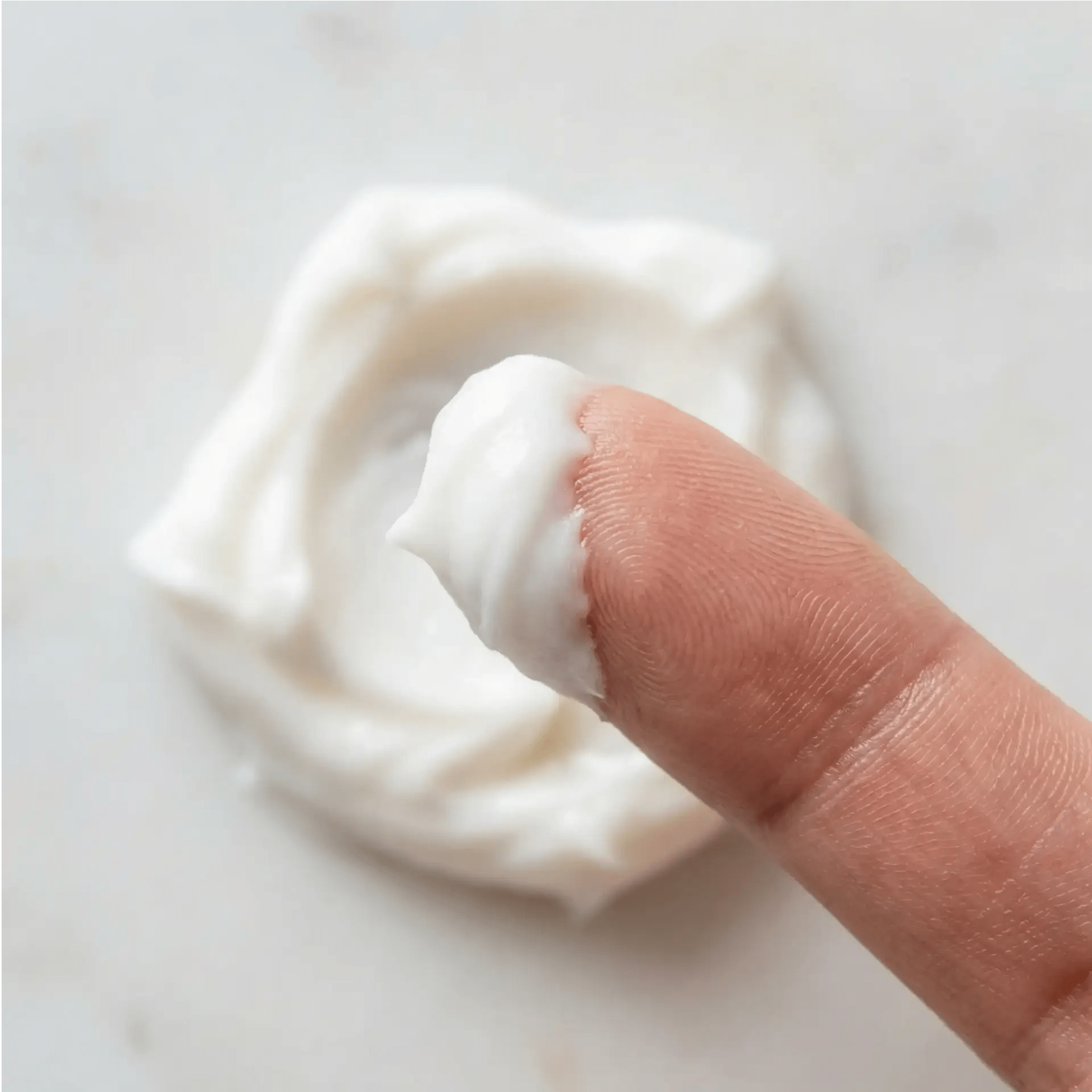
This is what most women try first, and what most women are still stuck on. Eye creams can hydrate the surface and temporarily reduce the appearance of fine lines, but they physically cannot reach the three root causes happening 2-3mm below. It doesn't matter if the cream costs $12 or $200. The molecules are too large to penetrate to the depth where the actual problems live. (12)(13)(14) Creams work great as a complement to something that's working underneath. On their own, they're surface-level at best.
Advantages
- Feels nice, temporary cooling/tightening
- Good for special occasions
Limitations
- Effects disappear within hours
- Single-use, creates waste and ongoing cost
- Zero effect on root causes
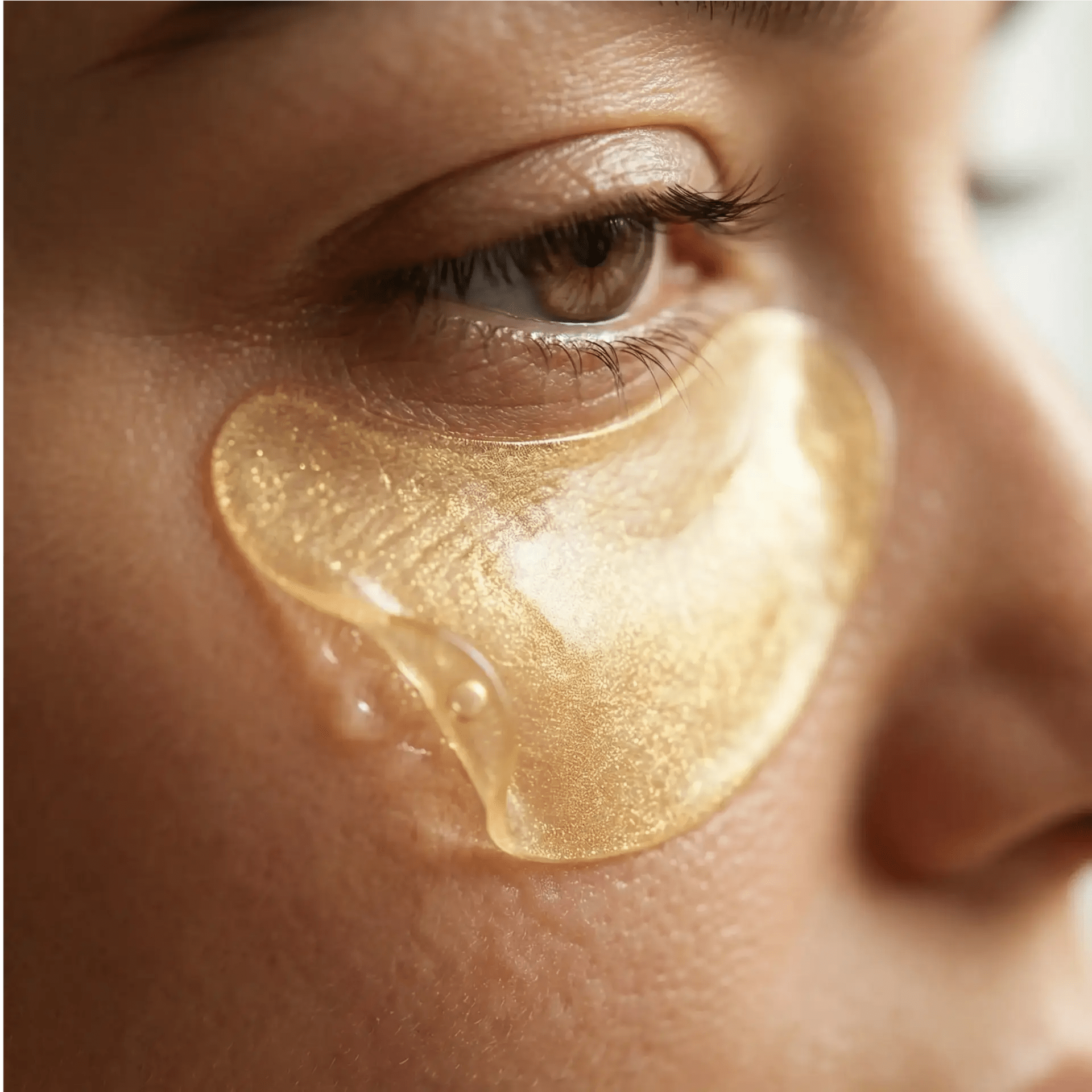
Under-eye patches are popular on social media but deliver almost nothing long-term. The cooling sensation and temporary tightening can make your skin look slightly better for a few hours, usually just enough for a photo. But patches suffer from the same fundamental problem as creams: they sit on the surface. No patch can restart circulation, drain fluid buildup, or rebuild weakening support structures 2-3mm below. (13)(14) At $2-$5 per use, the cost adds up quickly for something that's gone by lunchtime.

Advantages
- Affordable one-time purchase
- Can temporarily move surface fluid
Limitations
- Requires consistent manual technique
- Pressure is too light to reach root causes
- No effect on circulation or cellular support
- No clinical evidence for anti-aging benefits
Jade rollers and gua sha tools are affordable and feel pleasant, but the clinical evidence for their effectiveness on under-eye bags is essentially nonexistent. Manual rolling can temporarily move surface fluid and reduce very mild puffiness, but the pressure from a handheld tool simply can't reach the depth where the three root causes live. They also require proper technique, and most women either press too hard (risking bruising the delicate under-eye skin) or too light (achieving nothing). For mild, occasional puffiness they're fine. For real under-eye bags, they're not the answer.
Advantages
- It's cold
- It's free
- You already own one
Limitations
- Doesn't actually do anything
- You have to hold still for 10 minutes looking like a cartoon character
- Your family will have questions
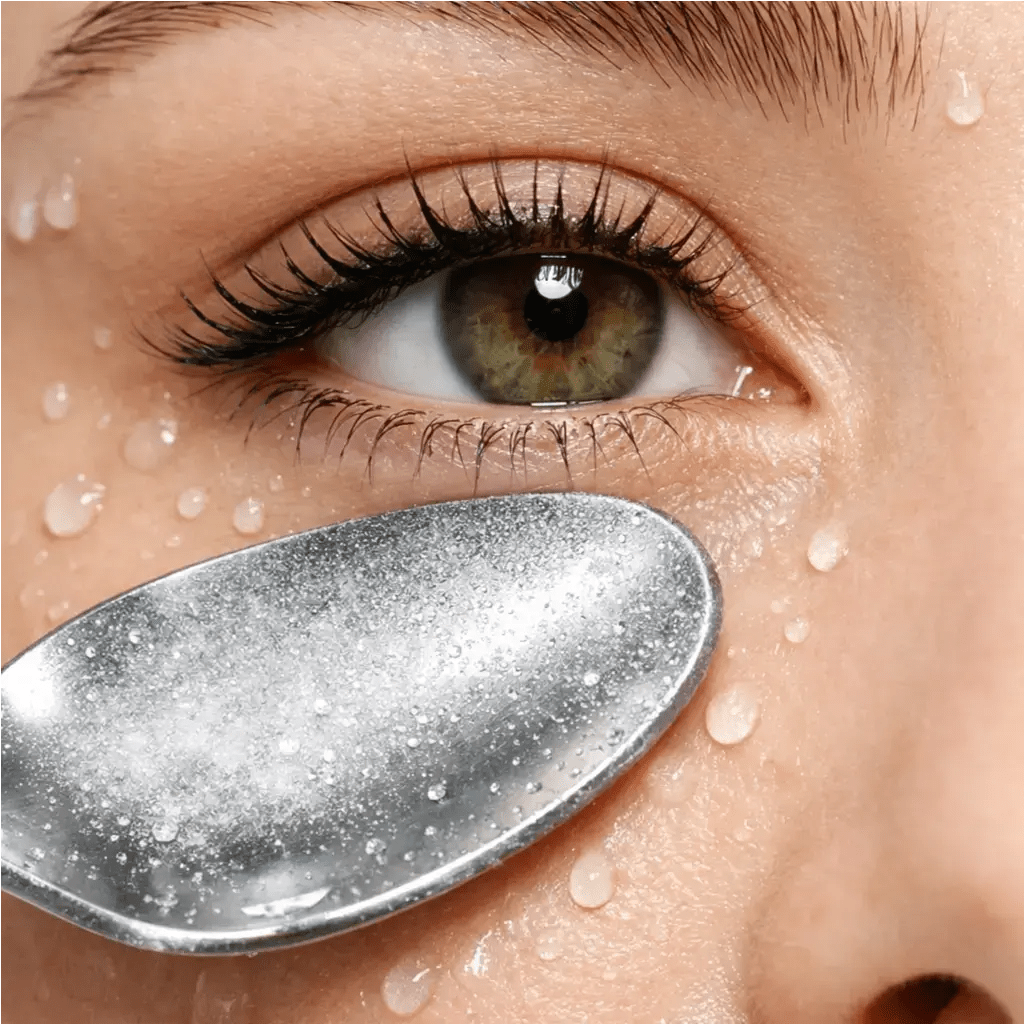
We're including this because, honestly, a surprising number of women still do it. The idea is simple: put two cold spoons from the freezer on your eyes and the puffiness goes down. And to be fair, it does. Temporarily. The cold constricts blood vessels near the surface and reduces swelling for about 15-20 minutes. Then everything goes right back to where it started.
Cold spoons can't reach 2-3mm below the skin, can't restart circulation, can't improve drainage, and can't rebuild structural support. What they can do is make you late for work while you lie on your bed with two spoons on your face wondering where it all went wrong. As a quick hack before a video call, sure. As an actual solution, no.
Our conclusion
After evaluating all five methods against objective criteria, at-home red light therapy combined with EMS microcurrent was the only approach that addressed all three root causes of under-eye bags. (1)(2)(9)(10)
Creams and patches can't reach the depth where the actual problems live. (12)(13)(14) Rollers lack clinical evidence. And cold spoons, well, they're free, but that's about all they have going for them.
The one device that combined both technologies in an at-home format, with real clinical research behind it and a return policy long enough to actually judge results, was RevitalEyes.
- Addresses all 3 root causes at once
- Backed by extensive clinical research
- 10 minutes a day, completely hands-free
- One-time purchase, no recurring costs
- Includes complimentary eye renewal cream
- 120-day money-back guarantee
120-day guarantee · Free shipping · Complimentary eye cream included
Frequently asked questions
Sources
- (1) Wunsch, A. & Matuschka, K. (2014). "A Controlled Trial to Determine the Efficacy of Red and Near-Infrared Light Treatment in Patient Satisfaction, Reduction of Fine Lines, Wrinkles, Skin Roughness, and Intradermal Collagen Density Increase." Photomedicine and Laser Surgery, 32(2), 93–100. PMC3926176
- (2) Dubec, M. & Sherwin, C. (2017). "Effect of wavelength and beam width on penetration in light-tissue interaction using computational methods." Lasers in Medical Science, 32(8), 1909–1918. PMC5653719
- (3) Lanzafame, R.J. (2020). "Light Dosing and Tissue Penetration: It Is Complicated." Photobiomodulation, Photomedicine, and Laser Surgery, 38(7), 393–394. PMC7374595
- (4) Selting, W., Hamblin, M.R. et al. (2021). "Review of light parameters and photobiomodulation efficacy: dive into complexity." Journal of Biomedical Optics, 26(4), 048002. PMC8355782
- (5) Teixeira, R.J. et al. (2024). "Red-light photons on skin cells and the mechanism of photobiomodulation." Frontiers in Photonics, 5, 1460722. Frontiers
- (6) Serrage, J. et al. (2024). "Unlocking the Power of Light on the Skin: A Comprehensive Review on Photobiomodulation." International Journal of Molecular Sciences, 25(8), 4483. MDPI
- (7) Chopra, S. et al. (2025). "Photobiomodulation and Photodynamic Therapy Using Red LED Light in Dermatology: A Narrative Review." Bratislava Medical Journal, 126(9), 2041–2053. Duke Scholars
- (8) Gold, M.H. (2021). "Photobiomodulation: The Clinical Applications of Low-Level Light Therapy." Aesthetic Surgery Journal, 41(6), NP723–NP738. PubMed: 33471046
- (9) Kavanagh, S. et al. (2012). "Use of a neuromuscular electrical stimulation device for facial muscle toning: a randomized, controlled trial." Journal of Cosmetic Dermatology, 11(4), 261–266.
- (10) Omatsu, J. et al. (2024). "Neuromuscular electrical stimulation for facial wrinkles and sagging: The 8-week prospective, split-face, controlled trial." Journal of Cosmetic Dermatology, 23(10), 3222–3233. PubMed: 38992992
- (11) Bu, P. et al. (2024). "Development of Home Beauty Devices for Facial Rejuvenation: Establishment of Efficacy Evaluation System." Clinical, Cosmetic and Investigational Dermatology, 17, 563–575. PMC10929553
- (12) Bos, J.D. & Meinardi, M.M. (2000). "The 500 Dalton rule for the skin penetration of chemical compounds and drugs." Experimental Dermatology, 9(3), 165–169.
- (13) Korać, R.R. & Khambholja, K.M. (2020). "Transdermal delivery systems in cosmetics." Biomedical Dermatology, 4(5). Springer Nature
- (14) Haque, T. et al. (2018). "Chemical Enhancer: A Simplistic Way to Modulate Barrier Function of the Stratum Corneum." Advanced Pharmaceutical Bulletin, 8(2), 169–179. PMC6046426
- (15) Johns Hopkins Medicine. "How to Get Rid of Bags Under Your Eyes." hopkinsmedicine.org
- (16) American Academy of Ophthalmology. "How to Get Rid of Bags Under the Eyes." aao.org
- (17) Cleveland Clinic. "Red Light Therapy: Benefits, Side Effects & Uses." clevelandclinic.org